
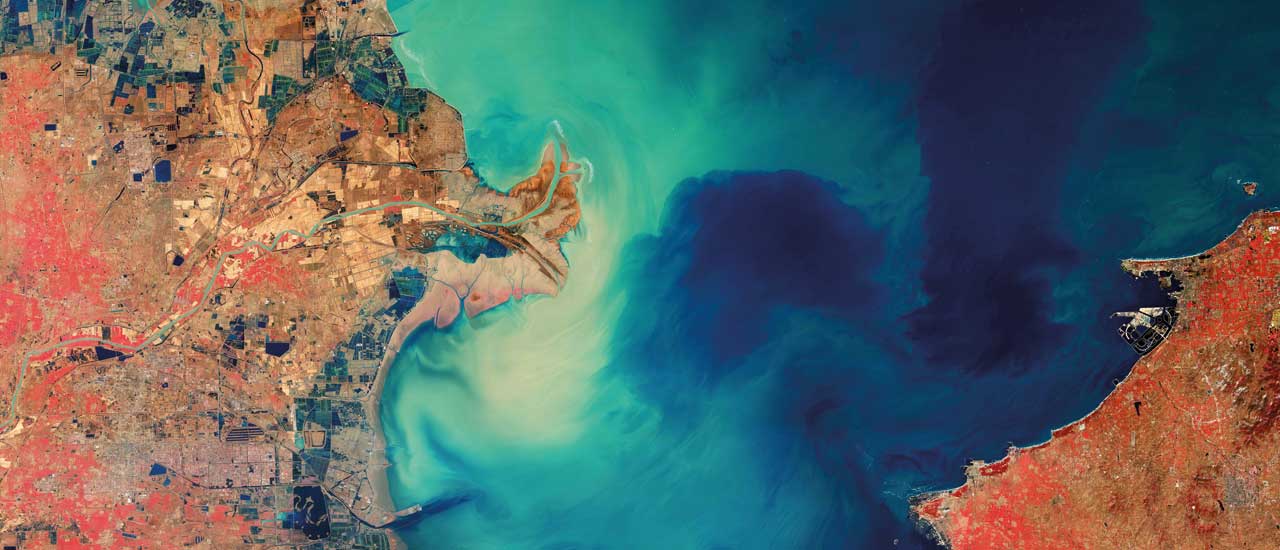
Copernicus EMS, CLMS services and products integrated with in situ measurements using drones
EUSATfinder foresees state-of-the-art 3D map integration of heterogeneous data (e. g. Earth Observation satellite + drone, several sensors). Now, data coming from different sensors will be integrated in a unique map. The photos will be acquired with an overlap of 80 to 90%. The 3D map or 3D model is then created using aerial image stitching photogrammetry software. The drone will fly using autonomous programmed flight paths called waypoints. Each photo captured will also have its GNSS coordinates (Geotagging saved, which also assists to build the 3D map) to obtain the following products:
- DEM / DTM / DSM (surface models)
- Orthophotos (geospatially corrected aerial images)
- Volumetric Surveys
Concerning the Copernicus data and information, proposed activities within EUSATfinder will rely on both existing Services (Service Usage) and dedicated processing (Innovative Algorithm Implementation). For what concern the Copernicus Services Usage, a particular attention will be devoted to two existing Services:
- the Copernicus Emergency Management Service (EMS), which has reached a very high level of maturity, being operational since 2012. The Rapid Mapping tool and products, as part of EMS Service, consist of timely geospatial information in support of emergency management activities immediately following disaster. The service is based on the acquisition, processing and analysis, in rapid mode, of satellite imagery and other geospatial raster and vector data sources, and social media when relevant.
- the Copernicus Land Monitoring Service (CLMS) provides a series of high-resolution geographical information on land cover/land use and their evolution at global scale. The products provided by High-Resolution Snow and Ice Monitoring of the CLMS contribute as an operational and a regular source of ice cover recordings within Europe, providing a critical parameter for a wide range of applications (water cycle, weather, hydrology, water management, natural hazards assessment). European Ground Motion Service (EGMS, part of CLMS), whose first baseline has been released in 2022, will be explored to map ground instabilities. Based on Sentinel-1 SAR data processed at full resolution, EGMS is conceived to provide for free seamless information regarding natural and anthropogenic ground motion phenomena over Europe, fundamental for landslide mapping and monitoring. Copernicus products is meant to provide tailored risk assessment for both recovery and preparedness phase of disaster management cycle. This product supports decision makers in localizing priority areas and helps defining mitigation measures.
With reference to the Innovative Algorithm Implementation, specific processing algorithms and procedures will be implemented to refine existing Copernicus tools and services exploiting both mid-resolution (Sentinel-2 & Landsat) and high-resolution (SPOT 5/6) optical multispectral images to provide information geomorphological evolution of the target area. In particular, the main envisaged scenario will consist in the creation of satellite-based glacier mapping using optical multispectral acquisitions in order set up a monitoring approach based on glacier displacements, variations in the glacier morphology and environmental variables, such as air temperature, rain and snowfall. Algorithms based on co-registration, orthorectification, and sub-pixel correlation will be adopted to track the geomorphological evolution of glaciers in near real time.